








Why Your Bra Size Might Change
If you've been wearing the same bra size for years, it might be time to check in. Bra size is not fixed; it can change more often than many people realize. Wearing the wrong size can affect everything from how your clothes fit to how comfortable you feel at the end of the day.
Here's what causes bra size to change, how to measure yourself at home and what styles to look for once you know your size.
The signs your bra doesn't fit
Even without measuring, your body will usually let you know something is off. Look for underwire that digs in or lifts away from your body, straps that slip no matter how tightly you adjust them, a band that rides up at the back, or cups that gap or overflow. Any of these points suggest it's worth re-measuring before your next purchase. Getting sized properly, even at home, takes about five minutes and can change how you feel in your clothes every day.
Why does bra size change?
There are a few common reasons your size might be different from what it was a few years ago.
1. Weight changes: Breasts are mostly fatty tissue, so weight gain or loss, even a small amount, can impact both your cup size and your band size. A change of a few kilos in either direction can often shift your fit.
2. Hormonal change: Your cycle, pregnancy, breastfeeding and menopause can all cause breast tissue to fluctuate. Some women notice their size changes month to month, while others experience a more permanent shift after significant hormonal events like having a baby or going through menopause.
3. Age: As skin loses elasticity over time, breast tissue can change in density and position. A style that worked well in your twenties might feel less supportive in your forties, not because your size has changed a lot, but because your shape has.
How to measure yourself at home
You don't need a professional fitting to get a good idea of your size. All you need is a soft measuring tape.
Step 1: Measure your band
Wrap the tape firmly around your ribcage, just under your bust. Keep it level and snug but not tight. Round to the nearest whole number. If the number is odd, round up to the next even number. This is your band size.
Step 2: Measure your bust.
Wrap the tape loosely around the fullest part of your chest, keeping it parallel to the ground. This is your bust size.
Step 3: Calculate your cup size.
Once you have your two measurements, use our bra size guide to match your band and bust to the right cup. You can also take our Bra Fit Quiz, which walks you through the process and recommends styles based on your result.
What styles suit different sizes?
Once you have your measurements, it helps to know which styles will work best for your shape.
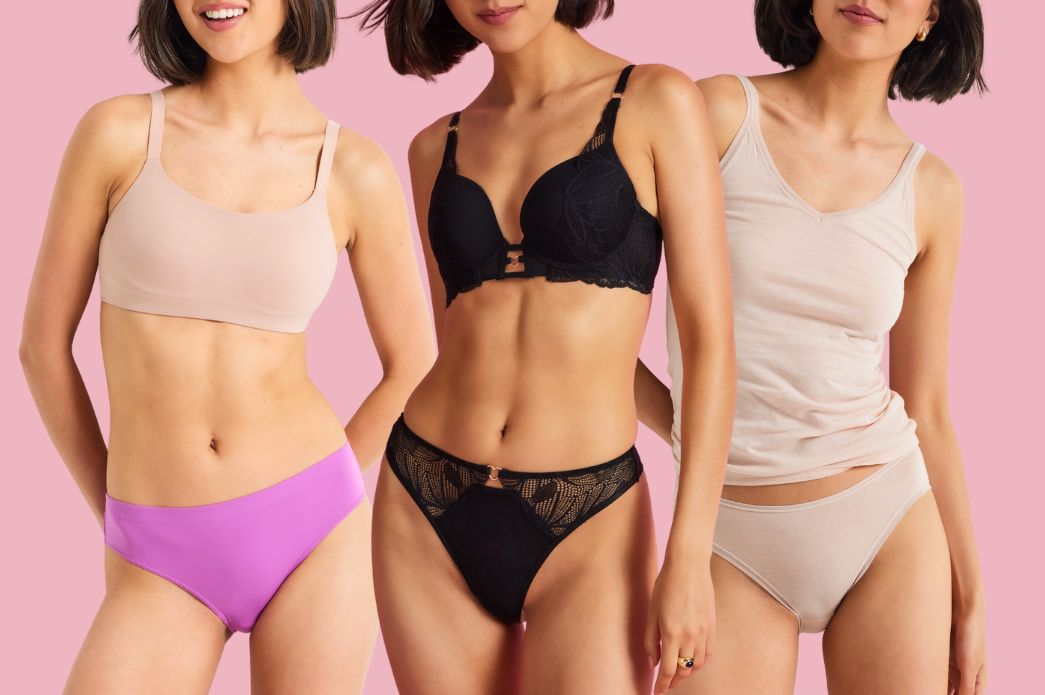
A and B cups tend to have the most flexibility. Bralettes, soft cup styles and wire-free bras all work well. You can often choose lighter constructions without sacrificing support.
C and D cups suit structured styles with molded cups, good band support and wider straps. A T-shirt bra with a smooth finish is a go-to for everyday wear, while a plunge style works well for lower necklines.
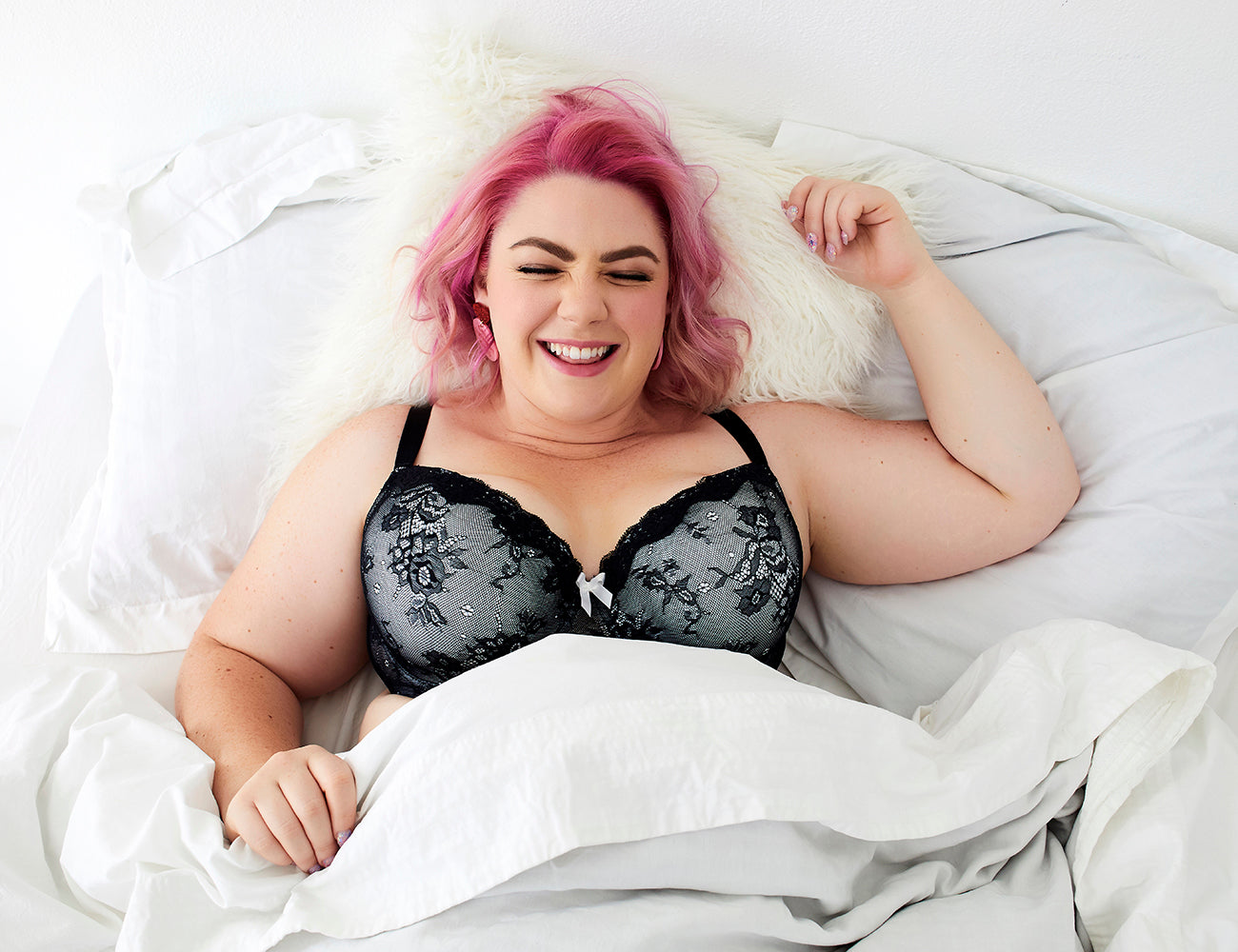
DD and above benefit from bras with full cups and a band that sits firmly against the body. Look for styles with three or more hook-and-eye closures and straps that sit wider on the shoulder to distribute weight evenly. Our Hold Up collection is designed specifically for D to G cups, with styles built to support without compromising on fit or finish.
Shop our range of bras across A to G cups.